
Olathe Frozen Pipes
Midwestern Arctic cold fronts pushing wind chill temperatures well below zero frequently freeze uninsulated supply lines routed through exterior cantilevers, crawlspaces, and north-facing walls. A sudden pressurized supply line burst sends large volumes of water through living spaces, necessitating urgent water shutoff, flood cuts, and commercial air movers. Our emergency crew responds around the clock with rapid containment gear to protect your home.
Phone (913) 555-0151 and our Olathe crew will inspect. We'll ask what you've noticed and how long it's been there.
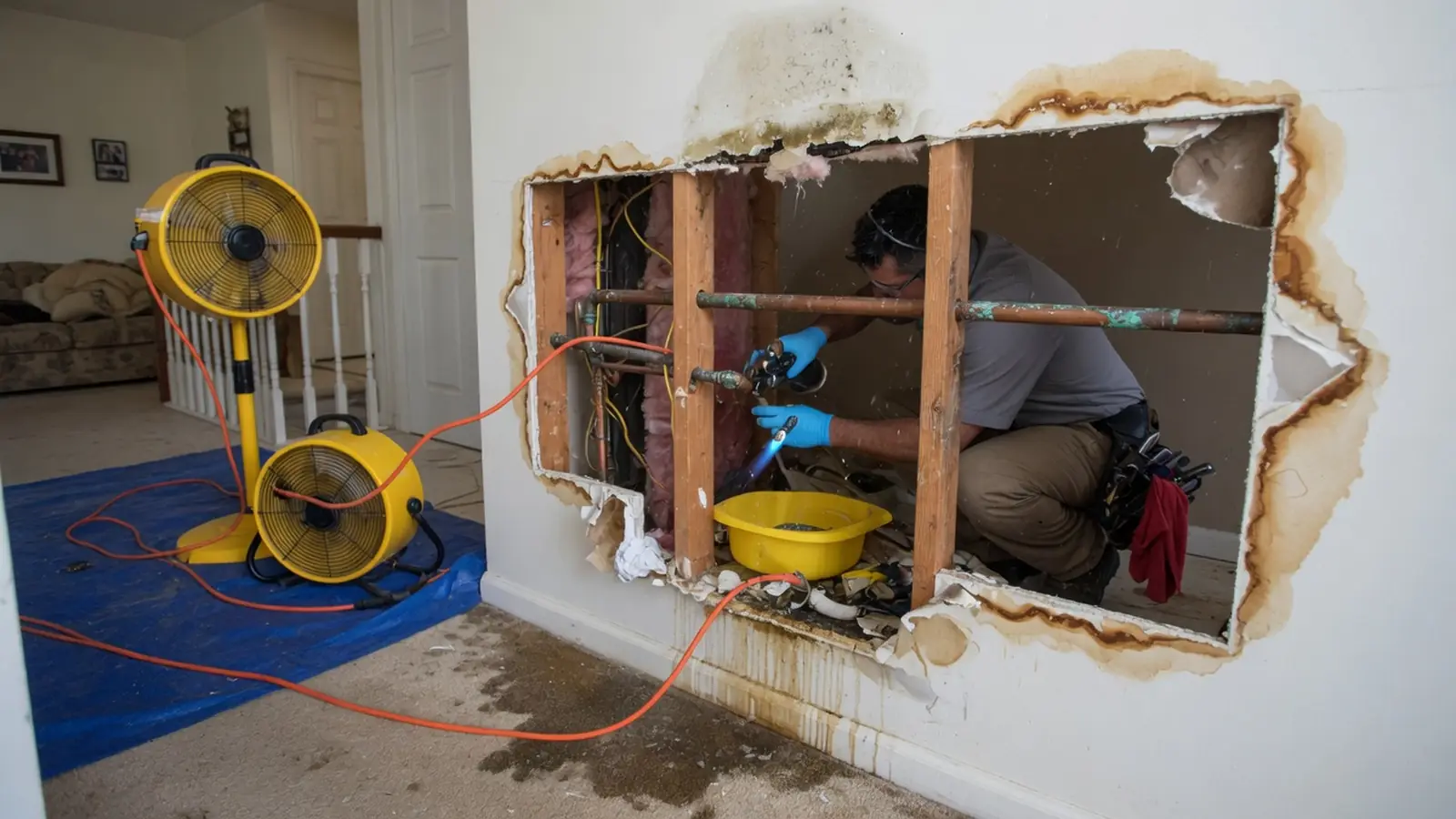
Local Burst Pipe Extraction Specialists
Explore our complete emergency water damage restoration services to see how we protect residential structures.
Census ACS 5-year estimates document 52,585 housing units across the municipality where winter temperature swings threaten uninsulated pipes.
Because the median owner-occupied home locally was built in 1994 according to Census ACS 5-year data, many original copper lines are experiencing metal fatigue.
Homeowners dealing with frozen plumbing struggle to spot hairline pipe fractures before the lines begin thawing and release water behind finished walls.
A pattern echoed in public discussions is how stormwater runoff overtaxes municipal sewer lines, forcing contaminated storm runoff and wastewater to back up through basement floor drains during severe winter weather shifts.
Our crew relies on non-invasive thermal imaging cameras and precision moisture meters to inspect every plumbing run before declaring a structure dry.
Thawing And Restoring Pressurized Lines
Allowing frozen household pipes to defrost without professional monitoring poses a severe risk of catastrophic indoor leaks once line pressure returns. We follow a strict safety protocol to thaw lines and contain pressurized water before structural damage spreads.
- Main Valve Security & Flameless Thaw. Crews use indirect thermal drying equipment rather than open flames to thaw frozen runs safely while keeping main shut-off valves ready for immediate rupture mitigation.
- Cavity Mapping & Fracture Inspection. Freeze ruptures frequently create hairline splits along copper seams that only release pressurized water once surrounding ice plugs melt inside finished wall cavities.
- Industrial Extraction & Cavity Airflow. We extract escaping water immediately, recognizing that homeowners often describe how mechanical sump pump failure during severe downpours submerges basements under several inches of water, forcing homeowners to weigh DIY cleanup against insurance claims when resolving basement flooding caused by groundwater intrusion.
- Deep Moisture Verification. Technicians place commercial dehumidifiers and document moisture levels in framing timbers until structural materials meet dry standards.
Controlled Safety Without Open Flames
We never rely on open flames or high-risk heating elements that can scorch framing timbers or crack plumbing joints. If moisture lingers behind drywall, find out more about our certified mold remediation solutions designed to prevent secondary microbial contamination. Every restoration project includes continuous thermal monitoring and calibrated meter logs to ensure your wall cavities are completely dry.
Flameless Pipe Thawing
We use indirect heat delivery systems to melt ice dams gradually without risking copper pipe expansion or structure fires.
Burst Pipe Emergency Extraction
When ruptures breach finished walls, our crews pump out standing water and remove soaked drywall before wood rot develops.
Structural Cavity Dehumidification
High-velocity air movers and commercial desiccant dehumidifiers dry hidden cavities, subfloors, and joists back to baseline standards.
Dedicated Emergency Restoration Standards
Our team approaches every frozen pipe call with disciplined thermal monitoring, structured containment, and industrial extraction equipment. We treat your property with surgical care, isolating moisture paths and confirming bone-dry readings across every framing member.
- 4Zip Codes Served
- 6Service Areas
- 3Services Offered
Here is direct feedback from local property owners who called our technicians to resolve frozen supply lines, thaw hidden ice blockages, and dry burst pipe emergencies.
“Another contractor offered a lower quote but planned to use open torches directly against our drywall without moisture sensors or shutoff backup. The crew arrived with flameless thermal equipment, carefully contained the thawing run, and prevented what would have been a catastrophic rupture behind our cabinets.”
Marcus B.
“When our upstairs water line split during an Arctic freeze, they documented all structural moisture readings according to local building guidelines before making clean flood cuts. Their meticulous inspection report gave our adjuster everything needed for rapid claim approval without a single dispute.”
Elena R.
“Our master bath line froze solid on a Sunday evening with zero water flow and temperatures plunging past zero. The team picked up immediately, walked me through isolating the supply valve, and arrived on-site in under an hour to monitor the thaw before any joints split.”
Darren K.
“After mitigating the line burst, the technicians made remarkably neat flood cuts exactly two feet up the drywall along clean laser-straight lines. Their drying equipment left our subfloor completely level without warping, and they bagged all wet insulation so no dust spread into our hallway.”
Chloe T.
Frequently Asked Questions
How do professionals thaw frozen household water pipes safely?
Technicians thaw frozen supply lines using flameless indirect thermal drying equipment while keeping main valves accessible to prevent pipe ruptures. Open flames or blowtorches present severe fire hazards and can cause thermal shock that splits plumbing joints instantly.
Can frozen pipes thaw on their own without causing damage?
Allowing frozen pipes to thaw unmonitored creates immense hydrostatic pressure behind ice plugs, often triggering catastrophic indoor wall floods. Hairline fractures formed during expansion only leak once the ice melts, making constant monitoring essential.
What should I do immediately if a pipe bursts inside my home?
Shut off your main water valve immediately, switch off circuit breakers to damp areas, and contact a certified structural drying contractor. Relieving pressure by opening lower faucets helps drain residual liquid from the plumbing network.
Why are pipes in exterior walls particularly vulnerable during cold snaps?
Exterior cantilevers and north-facing walls lack adequate thermal shielding against sub-zero Midwestern winds, freezing uninsulated runs quickly. Cold drafts penetrate exterior sheathing gaps and freeze standing water inside copper or PEX tubing.
How long does professional structural drying take after a burst pipe?
Complete structural drying typically requires three to five days of continuous commercial dehumidification and high-velocity air movement. Crews monitor daily moisture readings across subfloors and wall framing until all building materials return to equilibrium.